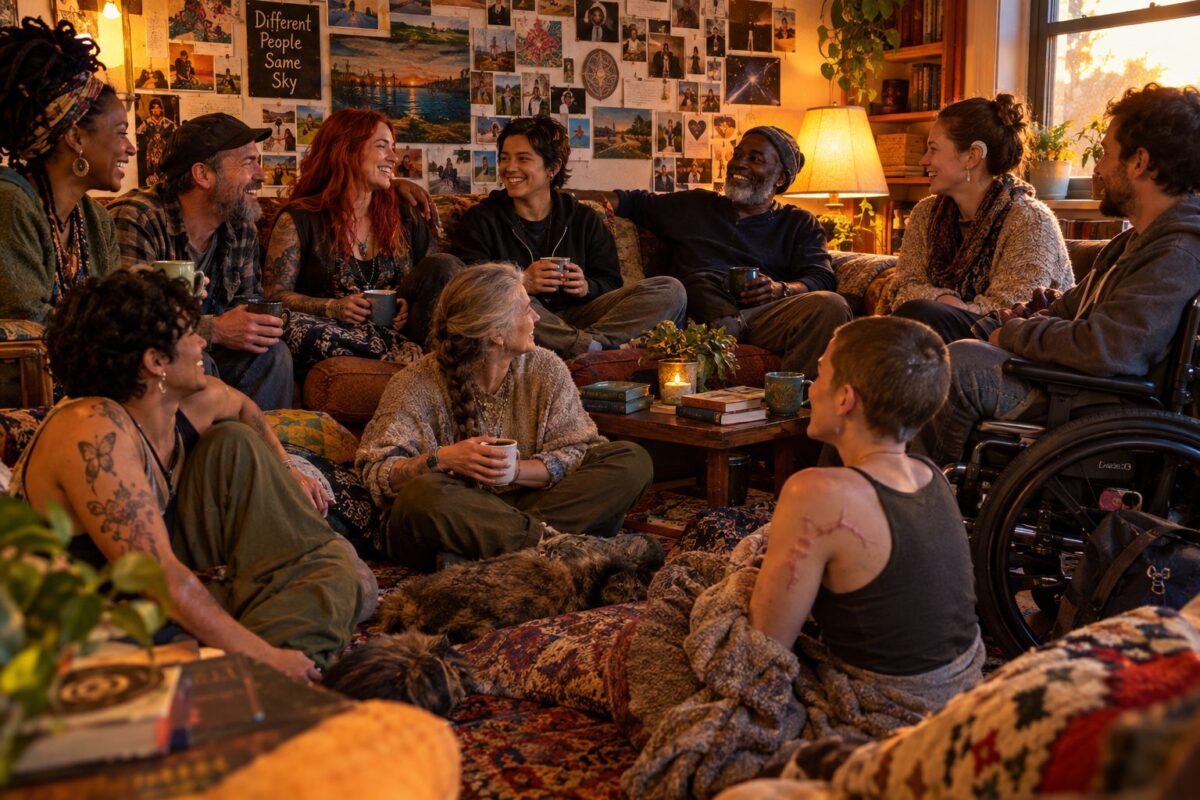
Finding Connection, Healing, and Real Belonging
You don't have to be alone. And you don't have to accept loneliness as the price of being different—disabled, neurodivergent, in recovery, or navigating a life that doesn't fit neatly into other people's expectations.
This month, we're talking about something that changed my life: building a chosen tribe.
Not a replacement for family. Not a backup plan. But a real, honest, sacred collection of people who get you, who see you, and who walk alongside you not because they have to, but because they choose to.
THE FAMILY YOU WERE BORN INTO (AND THE HEALING THAT COMES AFTER)
Some of us grew up in families that didn't understand us. Maybe they couldn't see past the disability. Maybe they labeled neurodivergence as laziness or stubbornness. Maybe they didn't know how to hold space for addiction, mental illness, or trauma. Or maybe—and this is real too—they did their best with what they had, but their best still left wounds.
The first step in building your chosen tribe isn't finding new people. It's healing the relationships you have, or deciding which ones are worth keeping, and which ones need boundaries.
Healing doesn't mean reconciliation. Sometimes it means distance. Sometimes it means staying in the relationship but changing what you accept from it. Sometimes it means letting go completely.
Setting boundaries is an act of love—toward yourself, and sometimes, toward them too. A boundary isn't rejection. It's clarity. It's saying: "I love you, and I can only show up in this way. If that doesn't work for you, I understand. But this is what I need to take care of myself."
If your family can respect that? You might find them becoming part of your chosen tribe too. If they can't? That's information. That's permission to protect you.
FINDING YOUR PEOPLE: COMMUNITY AND AUTHENTIC CONNECTION
You don't build a chosen tribe alone. You find it. And finding means looking—which can feel terrifying if you've been hurt, rejected, or told you're "too much."
But here's what I know: your people are out there. They're looking for you too.
Support groups changed my life. Not because everyone in the room was perfect or because we all became best friends. But because in a room full of people with disabilities, neurodivergent folks, people in recovery—I stopped having to explain myself. I stopped editing my truth. I could just be.
Maybe that's a formal support group. Maybe it's an online community. Maybe it's a hobby club where you found three people who actually get your humor. Maybe it's a recovery meeting. Maybe it's Discord, or Reddit, or a local coffee shop where the same people show up every week.
The point isn't where you find them. The point is that you look. You show up. You try. You stay vulnerable long enough for real connection to happen.
Authentic connection doesn't require perfection. It requires presence. It requires you showing up as yourself—disability, neurodivergence, recovery, trauma history, quirks, and all—and finding people who say "Yeah, I see all that. And I'm still here."
That's when you know you've found your tribe.
CHOSEN FAMILY AS SACRED (NOT "REPLACEMENT" — EQUAL AND REAL)
I need to say this clearly: your chosen family is not a lesser version of your biological family. It's not a backup plan or a consolation prize.
It's equal. It's real. It's sacred.
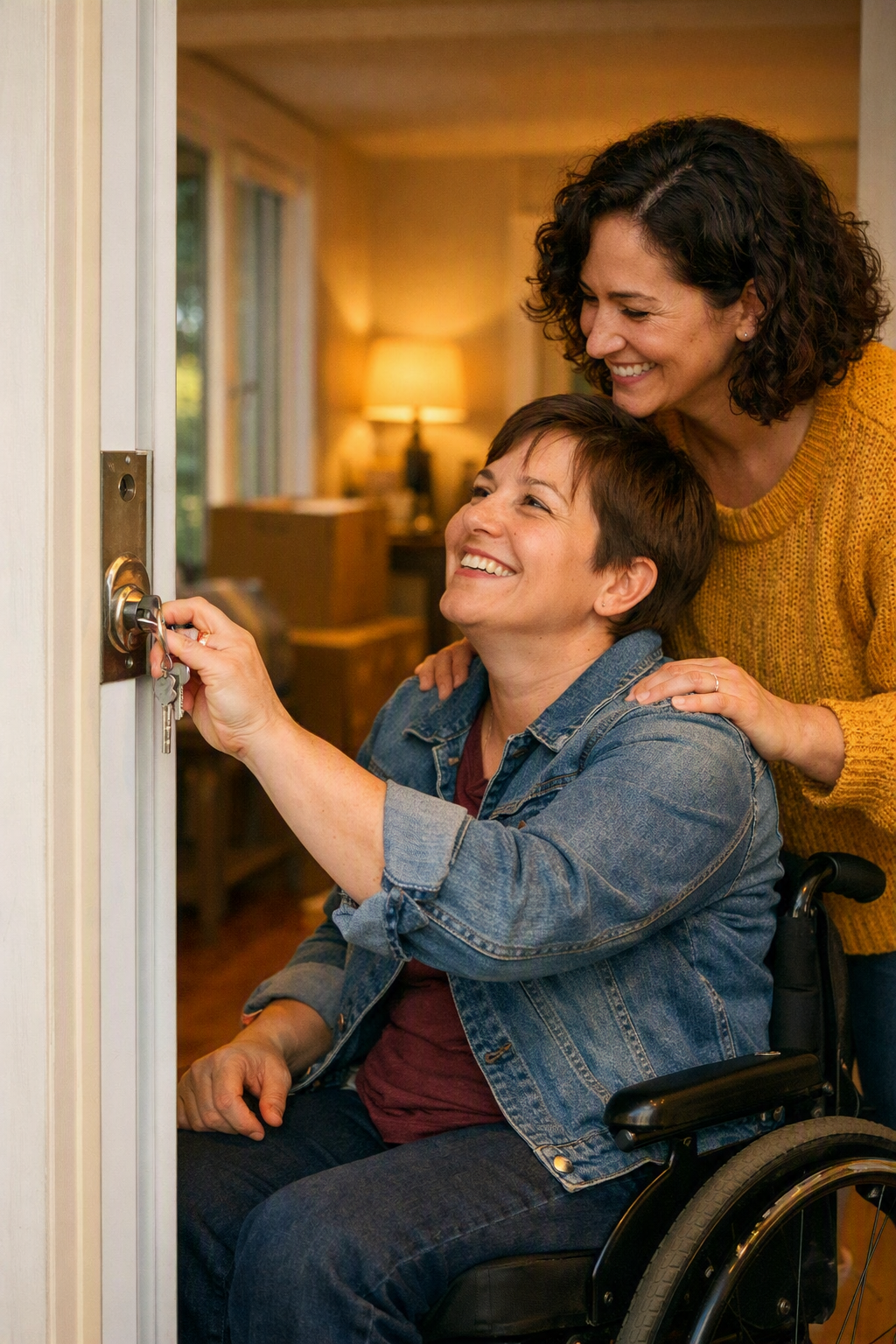
When someone chooses to show up for you—not because they're obligated by blood, but because they want to—that's profound. That's love at its most honest.
I have people in my life who are chosen family. They know my darkest moments. They've seen me at my ‘worst’ and stayed. They celebrate my wins like they're their own. And I do the same for them. We didn't choose each other by accident—we chose each other on purpose.
That's more powerful than obligation.
Chosen family doesn't replace your biological family. But it doesn't have to compete with it either. You can honor both. You can grieve what your biological family couldn't give you and celebrate what your chosen family does. Both things are true.
Your chosen tribe becomes your witnesses. The people who knew you when you were struggling, and who get to celebrate when you rise. The people who understand that disability, neurodivergence, and recovery aren't things to be ashamed of—they're part of who you are, and you're worth knowing fully.
That's sacred work. Honor it. Protect it. Build it intentionally.
VULNERABILITY AND TRUST IN RELATIONSHIPS WITH DISABILITIES
Vulnerability is terrifying when you're disabled. When you live with chronic pain, mental illness, neurodivergence, or trauma, letting someone see that can feel like handing them a weapon.
What if they leave? What if they pity you? What if they use it against you? What if they can't handle the hard days?
These aren't paranoid thoughts. These are survival instincts from a world that hasn't always been kind to us.
But here's what I've learned: you can't build real connection without vulnerability. And real connection won't happen with people who can't handle your truth.
Vulnerability isn't weakness. It's honesty. It's saying: "On Tuesdays, my pain flares and I can't leave the house. On bad mental health days, I need space but I also need to know you're there. My neurodivergence means I might need things stated directly. My recovery means certain things are triggers."
The right people will hear that and say: "Okay. How can I show up for you?"
The wrong people will make it about them—how hard it is for them to handle, how much it inconveniences them, how you should just "get over it."
Those aren't your people. Let them go.
Trust isn't blind. Trust is earned through consistency, through people proving they can hold space for your hardest days without running. Trust grows slowly, and that's okay. Take your time. Test the waters. See who stays when things get real.
Your chosen tribe will be people who've earned your trust—not just with their words, but with their presence.
NEURODIVERGENT FRIENDSHIPS: UNDERSTANDING DIFFERENT CONNECTION STYLES
Neurodivergent friendships look different. And that's not a flaw—that's just how we connect.
Maybe your friend doesn't text you for three months, then suddenly messages you a wall of thoughts at 2 AM. Maybe you bond over hyperfixations that change every six weeks. Maybe you have a friendship that's mostly online, or parallel play where you're together but doing separate things. Maybe you communicate primarily through memes, or you need explicit plans instead of "let's hang out sometime."
All of this is valid. All of this is real friendship.
Neurodivergent friendships also often have this beautiful honesty: we say what we mean because we have to. We don't have the energy for subtext. We don't play games. We show up as ourselves because masking is exhausting and we've run out of steam.
That can be jarring if you're used to neurotypical friendship rules. But it's also liberating.
In neurodivergent spaces—whether that's online communities, support groups, or just you and a few ADHD friends—you might notice something: nobody's waiting for you to be "normal." Nobody's keeping score of how often you reach out. Nobody's offended if you need to cancel because sensory overload hit. Nobody's surprised that you have three intense friendships and then radio silence for months.
We get it because we live it.
If you're neurodivergent, seek out other neurodivergent people. Not exclusively—but especially when you're building your tribe. You'll find an ease there that might surprise you. A home.
And if you're not neurodivergent but you have neurodivergent friends? Ask them what they need. Honor their connection style. Show up consistently, even if "consistently" looks different than you expected. That's how you become part of their chosen tribe.
LONELINESS ≠ INEVITABLE (HOW TO REACH OUT, STAY CONNECTED)
Loneliness is real. It's heavy. And if you've lived most of your life feeling isolated—because of disability, neurodivergence, trauma, or just being different—loneliness can feel permanent. Like it's just the price of existing.
It's not.
Loneliness is a signal. It's your body and heart saying: "I need connection." Not that something's wrong with you. Not that you're broken or unlovable. But that you need to reach out.
Reaching out is the hardest part. I know. The voice says: "They're busy. They don't really want to hear from you. You'll burden them. It's been too long."
But here's what I've learned: most people want to hear from you. They're just waiting for you to make the first move. They're lonely too.
So reach out. Send a text. Join a Discord community server. Show up to a support group meeting even though your anxiety is screaming no. Message someone you haven't talked to in months and say: "I've been thinking about you. I miss you. How are you?" Most of the time, they'll light up. They'll respond. They'll be relieved that you reached out first.
Staying connected doesn't require perfection. You don't have to text every day or remember every birthday. You can have friendships that ebb and flow. You can have people you only connect with every few months. You can have relationships that are primarily online, or that only happen at support group meetings.
The point is: you stay. You show up. You don't disappear completely.
And when you can't show up—because depression hit, or your disability flared, or life got overwhelming—you say so. You tell people: "I'm struggling. I'm going to be quiet for a bit, but I'm not gone. I'm still here."
Real people understand. Real people wait. Real people meet you where you are.
That's your chosen tribe.
RECIPROCITY IN RELATIONSHIPS: YOU HAVE GIFTS TO GIVE TOO
Here's what people with disabilities, neurodivergent folks, and people in recovery often forget: you're not just the person being supported. You're also the supporter.
You have gifts. You have things to offer. You matter in other people's lives—not just as someone who receives care, but as someone who gives it.
Maybe you're the person who remembers what people said three months ago when they forgot. Maybe you're the one who shows up with the sacred honesty when everyone else is tiptoeing around the truth. Maybe you're the listener. The one who actually hears people. The one who doesn't judge. The one who's been through hard things and knows how to sit with other people's pain.
Maybe you're funny in a way that only makes sense to other neurodivergent people. Maybe you're fiercely loyal. Maybe you see things others miss. Maybe you love deeply and completely, even when it scares you.
These are your gifts. Don't diminish them.
Real relationships are reciprocal. Not in a way that keeps score—not "you helped me once so I owe you." But in a way that's mutual. Where both people give. Where both people receive. Where both people matter.
You matter. Not because of what you can do for someone else. But because you are. Because your presence, your honesty, your struggle, your survival—these things matter. Your chosen tribe will know this. They'll tell you. They'll remind you on days when you forget.
And you'll do the same for them.
BRINGING IT HOME:
Building your chosen tribe isn't about finding perfect people. It's about finding real people. People who see you—disability, neurodivergence, recovery, trauma, quirks, and all—and say: "Yeah. You belong here."
It's about showing up. About vulnerability. About asking for what you need. About trusting slowly and carefully. About honoring the people who choose you.
It's about knowing that loneliness isn't inevitable. That you're not too much. That your people are out there, looking for you too.
Start small if you need to. One person. One support group. One online community. One moment of vulnerability where you let someone see the real you.
That's how tribes are built. One choice at a time. One person at a time. One act of courage at a time.
You deserve belonging. You deserve to be seen. You deserve your chosen tribe.
Go find them. Or better yet—let them find you.